
Course Details

This skill set addresses the skills and knowledge required for those responsible for developing traffic management plans and traffic guidance schemes on Temporary Traffic Management Category 1 environments as described in the Austroads Guide to Temporary Traffic Management.

  • Days 1, 2 and 3: Focus on the theory and practical aspects of the units. On Day 2 students will work using Rapid Plan software
  • Post Course Assessemnt: Student needs to complete post course asserssment (practical experience) within at least six months of successfully completing the theoretical component.

This nationally recognised Skill Set is delivered by Civil Contractors Federation (Victoria Branch), a Registered Training Organisation (RTO Number 3704) and an AustRoads approved training provider.

Prerequisites

Students must meet one of the following pathway requirements before enrolling. Once we receive your enrolment, you will be given access to our online Learning Management System (LMS) to upload your prerequisite documents. Your enrolment will be reviewed and confirmed only after the prerequisite evidence has been assessed and approved.

Pathway A – Existing TMD Workers
  • Must be currently permitted in their jurisdiction, prior to the jurisdictional adoption date, to develop, review or audit traffic management designs or traffic guidance schemes, and
  • Must provide evidence of currency of practice. This must demonstrate that in the past 3 years the applicant has designed, or reviewed, or audited a minimum of 12 TMPs or 12 TGSs. (The TMPs or TGSs must include a minimum of four different worksite locations that are within the relevant jurisdiction. These worksite locations may include TTM Category 1 or TTM Category 2 or TTM Category 3 roads or sections of the network.)

— OR —

Pathway B – Tertiary Qualification
  • At least an AQF Level 6 qualification in a civil construction, traffic engineering, or road design related field; or

— OR —

Pathway C – Implementer Experience

Completion of any one of the following Implementer skill sets:

  • RIISS00060 Traffic Management Implementer Skill Set for Urban Streets and Low Volume Rural Roads
  • RIISS00061 Traffic Management Implementer Skill Set for High Volume Roads
  • RIISS00062 Traffic Management Implementer Skill Set for Motorways and Freeways

AND

  • At least 12 months experience applying the relevant skills and knowledge in a temporary traffic management workplace; and
  • Providing evidence of relevant experience setting up at least 20 temporary traffic management types in at least four of the following design types:
    • Pedestrian and cyclist controls
    • Construction sites
    • Lane closures
    • Shoulder closures
    • Night works
    • Use of portable traffic control devices
    • Motorways or freeways

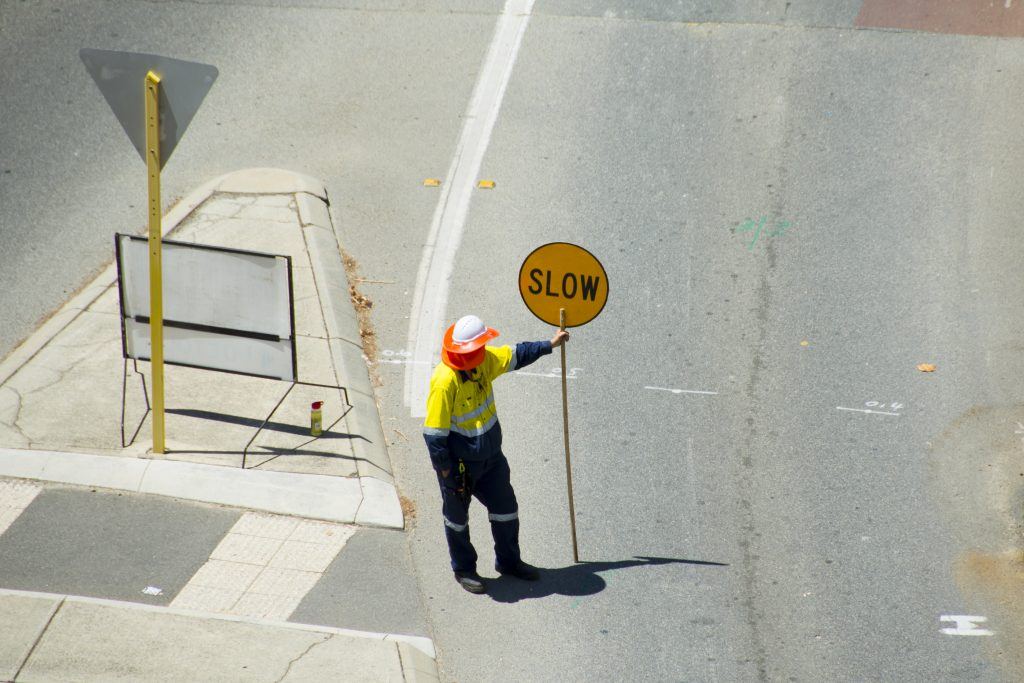
Traffic Management Training Image

Who should attend?
Individuals responsible for developing traffic management plans and traffic guidance schemes for Temporary Traffic Management Category 1 roads.

What You Will Receive on Completion?

Upon successful completion of the course, students will receive a Statement of Attainment detailing the competencies associated with the following skill set:

RIISS00063 - Traffic Management Designer Skill Set for Urban Streets and Low Volume Rural Roads (TMD1)

  • RIIRIS402E - Carry out the risk management process
  • RIICWD503E - Prepare traffic management plans and traffic guidance schemes

Upon successful completion of the course, learners will be registered in the Austroads national database. A digital licence will be issued by Austroads, which must be held and available for presentation while undertaking work at traffic management sites.

Is Refresher Training Required in future?
More information regarding this course refresher will be available later; at this stage it is anticipated a refresher will be required every three years.

How long does the course take to complete course?

The TMD1 Practitioner course includes 3 days of face-to-face classroom training, followed by post-course assessment requirements.

Students have up to 6 months to complete all assessment requirements. All required documents must be submitted by the end of Month 4 for trainer review and feedback. Students may revise and resubmit their work based on feedback before final assessment approval.

A Statement of Attainment (SOA) is issued once all assessments are marked satisfactory.

When did traffic management training change in Victoria?
The New TTM National Training Framework was adopted in Victoria from 1 December 2023. The new Traffic Management Design (TMD) training became mandatory on 10 July 2024. Qualifications received under the previous TMD course (RIICWD503E) will continue to be recognised until they expire or three years from date of issue or before 10 July 2027 (whichever is earliest).

What is the transition period for existing TMDs in Victoria?
Existing RIICWD503E qualifications issued under the previous Victorian system will continue to be recognised until their expiry date, 3 years from the date of issue, or 10 July 2027 (whichever occurs first). After this date, workers must hold the relevant qualification(TMD1, TMD2, or TMD3) under the National Temporary Traffic Management Framework to continue undertaking Traffic Management Design activities in Victoria.
Don't wait until the transition period ends. As demand for TMD training continues to grow, existing designers are encouraged to transition to the new framework well before their qualification expires to avoid any disruption to their ability to perform Traffic Management Design work.
New entrants: Since 10 July 2024, anyone entering the designer pathway must complete the applicable TMD1, TMD2, or TMD3 training under the National Framework. The 2027 transition date applies only to holders of legacy Victorian TMD qualifications.
The new qualifications are licensed by Austroads, and on successful completion of the course, learners are registered in the Austroads national system, ensuring consistent recognition across all participating jurisdictions.

What can I do after completing the TMD1 course?
After completing the TMD1 (Traffic Management Designer 1) course, you can begin working as a Traffic Management Designer for Category 1 roads and develop your skills in preparing Traffic Management Plans (TMPs) and Traffic Guidance Schemes (TGSs).
You may also progress to higher-level qualifications such as TMD2 and TMD3, which allow you to design for more complex and higher-risk road environments.

What is the difference between Practitioner and Non-Practitioner TMD courses?

TMD Practitioner (e.g. TMD1 Practitioner)

  • Designed for people who will actively design Traffic Management Plans (TMPs) and Traffic Guidance Schemes (TGSs)
  • Includes full competency-based assessment and post-course evidence submission
  • Requires application of AGTTM design principles in real or simulated projects
  • Leads to eligibility for formal designer capability under the National Framework


TMD Non-Practitioner

  • Designed for people who need understanding of traffic management design principles but will not produce designs
  • Focuses on theory, awareness, and interpretation of TMPs and TGSs
  • Does not require full design competency assessment
  • Suitable for supervisors, managers, or stakeholders who review rather than create designs

Simple summary:
Practitioner = can design
Non-Practitioner = can understand and review, but not design

Why Choose CCF Victoria for Traffic Management Training?
  • 🏆 2026 Traffic Management RTO of the Year awarded by TMAA
  • 🏆 2025 Small RTO of the Year awarded by Victorian Training Awards
  • Austroads-Approved Training Provider
  • Experienced Industry Trainers
  • Trusted by Industry for more than 80 years
  • Strong Industry Connections
Civil Train Fees, Charges and Refund Policy

Please ensure that you read the Civil Train Fees, Charges and Refund Policy and check the Terms and Conditions before enrolling in this course with Civil Train. If you have any questions about our Fees, Charges or Refunds/Cancellations Policy, please contact CCF Victoria on (03) 9588 7600.

On-site Group Training Available

We can arrange on-site training at your workplace or delivery at our training facility, ensuring all program requirements are met while providing a convenient and flexible training solution for your team.